AI-based Drug Discovery

The AI Drug Discovery Ecosystem
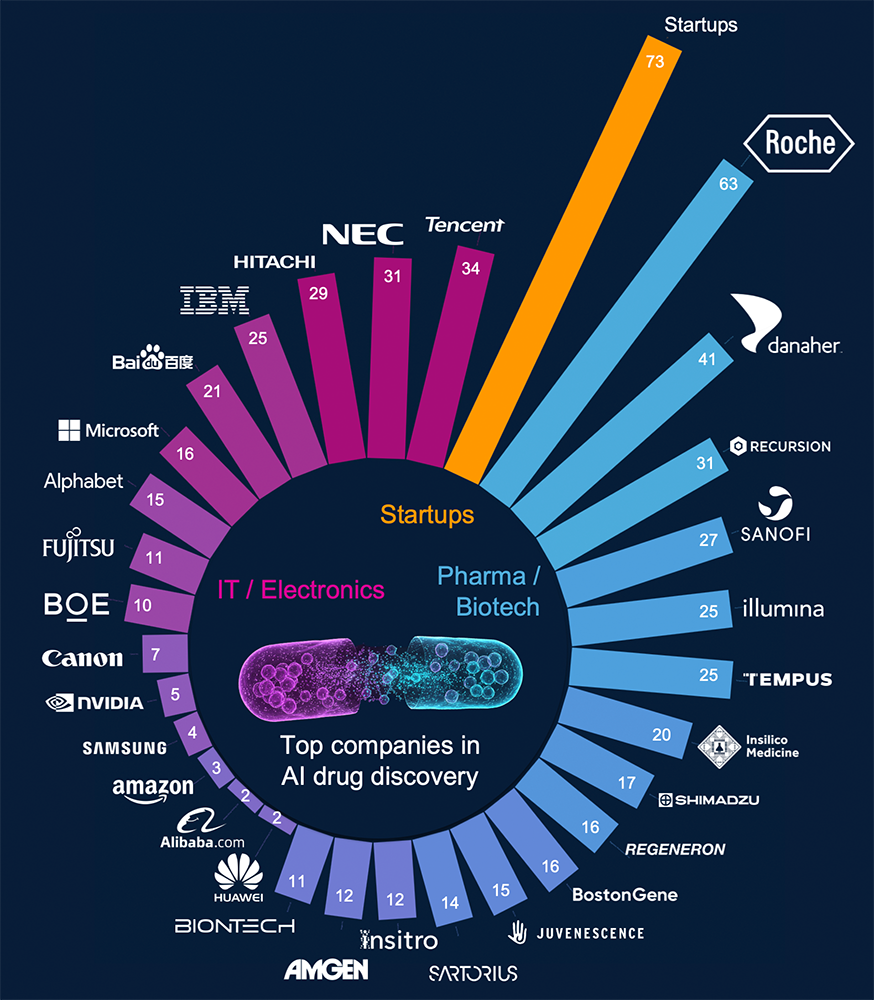
Top Players
(Patents, 2025)
Competition, Collaboration, and Convergence
AI-driven drug discovery has become one of the most powerful trends in Pharma and Biotech. Patent activity has doubled over the past two years, reflecting the enormous expectations placed on AI to accelerate R&D. By predicting promising targets and molecules before costly lab work begins, AI explores vastly larger chemical spaces and identifies safety or efficacy risks earlier – reducing time, cost, and late-stage failures.
That said, the narrative is maturing: the industry is shifting from “AI will solve everything” to a more pragmatic “AI improves decision quality” view.
The competitive landscape is diverse. It includes major Pharma and Biotech companies, Big Tech players, AI-native biotech firms, and highly specialized startups.
Notably, Roche currently leads in patent activity, with 63 patents and strong growth momentum. Many other large pharma companies are choosing partnerships over building full-stack AI capabilities internally, while Big Tech companies focus on delivering the compute power, cloud infrastructure, and specialized AI platforms that enable molecular design at scale.
Beyond Pharma and Big Tech, a dynamic startup ecosystem is emerging. These companies either build AI platforms that predict, design, and optimize therapeutic molecules, often in partnership with pharma, or use those platforms to develop their own drug pipelines. Many also combine AI with automated labs or focus on niche areas such as protein design, drug repurposing, and rare disease discovery.
Detailed company lists including startups, and full patent lists with scores can be purchased below.
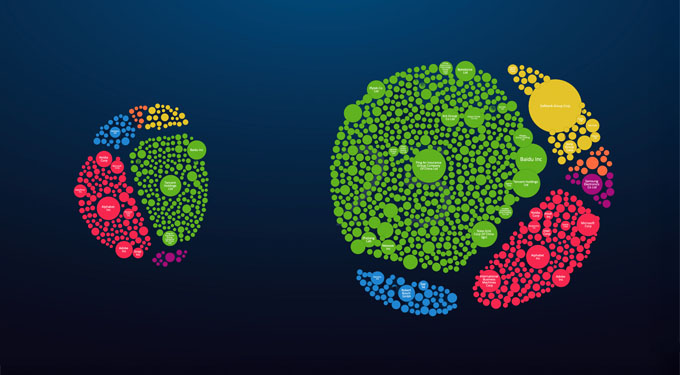
The AI Drug Discovery Ecosystem
The chart includes 100 companies with at least 3 patents in ai-based drug discovery
(complete dataset with more than 400 companies can be purchased below)